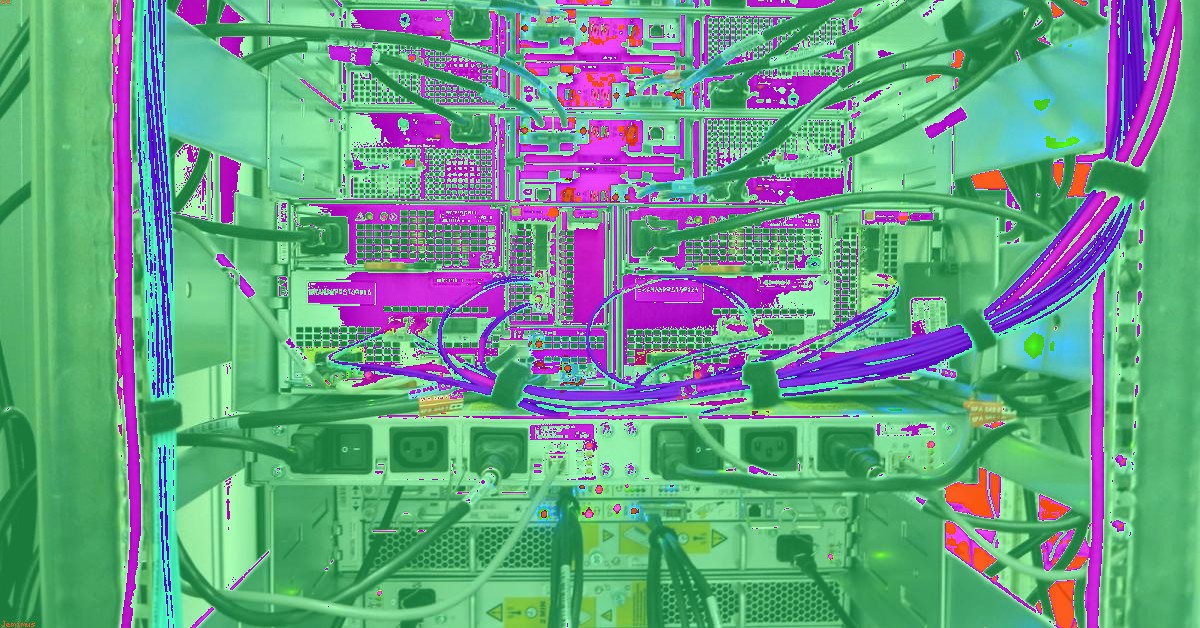
The End Of The Server Room: What Happens When Your Cameras Start Thinking
If you’re still relying on a centralized server room to process every video feed from your security cameras, you’re already behind. Not because your hardware is outdated—but because your operational model is.
The shift from “record everything, review later” to “analyze everything, act now” is rewriting the rules of physical security. And it’s not just about cameras. It’s about how your organization responds to risk, optimizes workflows, and redeploys human capital.
In this article, we’ll break down exactly what happens when edge-AI cameras take over decision-making at the source—and why the server room as we know it is fading into irrelevance.
The Old Model: Record, Store, Review (and React Too Late)
For decades, the standard surveillance workflow looked like this:
- Cameras capture video 24/7.
- Data streams to a central server room (NVR or DVR).
- Footage is stored for 30, 60, or 90 days.
- Only after an incident occurs do humans comb through hours of footage to find a clue.
The problem? It’s reactive. You’re always looking backward. And the cost—storage, bandwidth, IT maintenance—grows linearly with every new camera you add.
According to industry benchmarks, a single 4K camera can generate over 10TB of data per year. Multiply that by 50, 100, or 1,000 cameras, and your server room becomes a black hole for your IT budget.
Enter Edge-AI: Cameras That Don’t Just Watch—They Think
Today’s edge-AI cameras don’t wait for a postmortem. They recognize patterns in real time, flagging anomalies before they escalate.
Here’s how it works:
- The camera’s onboard chip runs a lightweight neural network.
- It processes video frames locally—no cloud, no server room.
- It identifies objects (people, vehicles, packages), behaviors (loitering, running, fighting), and even context (time of day, zone restrictions).
- Only relevant events trigger alerts or recordings. Everything else is discarded or compressed.
The result? Your cameras become decision-makers, not dumb data harvesters.
What Changes When Cameras Start Thinking in Edge Mode
1. Your Server Room Shrinks (or Disappears)
When cameras process video on the edge, the amount of data sent back to a central hub drops by 90% or more. You no longer need massive RAID arrays, dedicated NVRs, or expensive cooling systems.
- Before: 50 cameras × 10TB/year = 500TB of centralized storage.
- After: Only metadata and event clips (maybe 5TB total).
Your server room becomes a small closet—or a virtualized cloud endpoint.
2. Your Response Time Drops from Hours to Seconds
With centralized processing, a guard sees an alert minutes after the event—if at all. With edge-AI, the camera sends an instant push notification to your security team’s mobile devices.
Imagine this scenario: A person climbs a fence at an industrial site. The edge camera detects the anomaly, cross-references it with a watchlist, and immediately notifies the nearest guard—all within 2 seconds. No human review needed.
That’s not theory. That’s deployment-ready today.
3. Your Bandwidth Costs Collapse
Video streaming consumes massive bandwidth. In distributed environments—retail chains, warehouses, school campuses—this can eat up your WAN capacity.
Edge-AI flips the logic: Instead of sending raw video to the cloud, the camera only transmits meaningful events. This reduces bandwidth consumption by 80-95%, depending on the environment.
For a company with 100 cameras, that’s hundreds of dollars saved monthly on data transfer.
4. Your Security Team Works Smarter, Not Harder
The biggest bottleneck in security operations is human attention. Guards stare at multiple screens, hoping to spot something. It’s exhausting and unreliable.
Edge-AI acts as a force multiplier:
- Cameras alert only when a true anomaly occurs.
- False alarms (leaves blowing, shadows) are filtered at the source.
- Guards are freed to patrol, investigate, and respond—not watch monitors.
According to early adopters, this shift reduces false positive alerts by 60-80% and improves incident detection accuracy by 40%.
Real-World Use Cases Where Edge-AI Cameras Replace Server Rooms
Retail: Theft Prevention Without Central Monitoring
A national retailer deploys edge-AI cameras at each store. The cameras detect when a customer aggressively handles high-theft items (like electronics) and alerts a remote security agent. No server room needed at the store level. Only event clips are uploaded to a central portal.
Warehousing: Safety Compliance in Real Time
In a 500,000 sq ft warehouse, edge cameras monitor forklift traffic. If a driver enters a restricted zone without a safety vest, the camera issues an audible warning on-site—no human operator required. The event is logged for safety audits.
Campus Security: Active Threat Detection
A university installs edge cameras at building entrances. They detect weapons (via shape recognition) without requiring a human to look at a gun. Alerts go directly to campus police within seconds.
The Technical Shift: From Centralized to Distributed Intelligence
Understand the architecture change:
| Traditional | Edge-AI |
|---|---|
| All video streams to a central server | Processing happens on camera chip |
| High latency for alerts | Sub-second response |
| Heavy storage costs | Minimal storage, event-only retention |
| WAN bandwidth bottleneck | Sparse data outbound |
| IT dependency for maintenance | Self-monitoring cameras |
This is not a marginal improvement. It’s a structural shift in how security data flows through your organization.
What About the Cloud? Isn’t That the Future?
You might be thinking: “Okay, but isn’t cloud video surveillance the next step?”
Yes—but edge-AI is the bridge. Here’s why:
- Bandwidth costs still hurt. Streaming 24/7 to the cloud is expensive.
- Latency matters. Cloud processing adds 1–3 seconds of delay. In security, that matters.
- Privacy compliance. GDPR, CCPA, and other regulations favor local processing over cloud storage of personal data.
Edge-AI cameras store raw footage locally (on the camera’s SD card or a minimal NVR) and only send anonymized metadata or event clips to the cloud for remote access.
So the real future isn’t “all cloud” or “all edge.” It’s a hybrid model where edge cameras handle real-time decisions, and the cloud serves as a long-term archive and remote dashboard.
What This Means for Sales and Revenue Teams
If you sell security cameras, video management software, or related services, the edge-AI shift is your biggest growth lever (or competitive threat).
For hardware sellers:
- Bundle edge-AI cameras with a subscription to a cloud event management platform.
- Stop selling “more storage.” Sell “lower total cost of ownership.”
For software vendors:
- Build integrations that interpret edge camera metadata.
- Offer predictive analytics on event patterns over time.
For system integrators:
- Position yourself as an “edge migration specialist.”
- Help clients dismantle underused server rooms and refocus on intelligent camera placement.
The companies that pivot now will own the next decade of physical security.
The Three Risks You Must Address Before Going Edge
-
Camera power and connectivity. Edge processing requires consistent power. Ensure PoE+ (Power over Ethernet) or battery-backed power systems are in place.
-
Model update management. AI models evolve. You need a way to push updates to cameras remotely without manual intervention.
-
False positive tuning. No AI is perfect. Plan for a 2–4 week calibration period where the system learns your specific environment.
The Final Takeaway: Cameras Become Sensors, Not Screens
The end of the server room isn’t about saving money on electricity (though you will). It’s about transforming your cameras from passive recorders into active participants in your security ecosystem.
When a camera starts thinking at the edge, it stops being a piece of hardware and starts being a sensor that can:
- Detect a fire before it spreads.
- Identify a tailgating intruder in a parking garage.
- Monitor store shelf stock and trigger an automatic restock notification.
And your server room? It becomes an afterthought—a small closet housing a switch and a few drives, not the beating heart of your security operations.
The future belongs to organizations that push intelligence to the edge. The question is: Will your cameras start thinking before someone else’s do?
Action Step: Audit your current camera deployment. Calculate your annual storage and bandwidth costs. Now imagine cutting those by 80%—and getting real-time threat detection in return. That’s the edge ROI. Start with one test site, and you’ll never look back.