Why Neurotech Chose Precision Over Scale—And What That Means for BCI’s Future
The brain-computer interface (BCI) industry is at a fascinating crossroads. For years, the prevailing narrative has been one of boundless potential: a future where millions of people seamlessly control devices, restore lost functions, and even augment human cognition through direct neural links. But if you look closely at the decisions being made inside the labs and boardrooms of the neurotech sector, a different, more sobering story emerges. The path to scale has not been blocked by a lack of computing power, bold ambition, or even regulatory hurdles. The real limiting factor has been signal resolution.
In the race to make BCI mainstream, the industry has quietly made a pivotal choice: prioritize signal clarity over immediate accessibility. This decision, while counterintuitive for a field obsessed with mass adoption, is reshaping the entire landscape. Let’s unpack why BCI could reach millions, why the neurotech community deliberately decided it shouldn’t—yet—and what this means for revenue teams, product leaders, and growth strategists building in this space.
The Signal Resolution Bottleneck
Imagine trying to have a conversation in a crowded stadium. You can hear a roar, but you can’t pick out a single voice. That’s the challenge BCI has faced for decades. Early systems relied on EEG and basic electrode arrays, capturing the brain’s electrical chatter but with the granularity of a low-resolution photograph. You could detect “yes” or “no” signals, maybe move a cursor left or right. But you couldn’t decode a complex thought, a finger’s intended movement, or a patient’s desire to speak.
The limiting factor in scaling BCI has never been compute. We have more than enough processing power to handle neural data. It hasn’t been ambition. There are dozens of companies, from Blackrock Neurotech to Neuralink, funded by billions in private and public capital. The bottleneck has been signal resolution—the ability to capture, isolate, and interpret individual neural firings with enough fidelity to control high-bandwidth applications like prosthetics, communication devices, or even augmented reality interfaces.
For context, consider this: a standard EEG system captures roughly 20–50 electrical events per second from a broad region of the cortex. An invasive microneedle array can record from hundreds of neurons simultaneously, each firing in specific patterns. The difference is like comparing a 10-pixel image to a 4K video. To reach millions of users—think paralyzed individuals, amputees, or even healthy consumers—you need a system that is both high-resolution and non-invasive. That combination has proven elusive.
The industry’s decision to delay scale in favor of resolution is a bet on long-term viability over short-term hype. It’s a classic “choose your bottleneck” strategy: by cracking signal quality first, you build a platform that can later expand to millions. But it comes with a price—slower market penetration and a narrower initial user base.
The Market Split: Invasive vs. Non-Invasive
The BCI market has bifurcated into two camps, each wrestling with signal resolution in its own way.
The Invasive Camp: High Resolution, High Risk
Companies like Neuralink, Synchron, and Blackrock Neurotech are betting on surgical implants. These devices sit directly on or within the brain tissue, capturing neural signals with unprecedented precision. Neuromodulation startups like Motif Neurotech are also exploring deep brain stimulation for conditions like depression, but these too require surgery.
The upside is obvious: high signal resolution enables control of complex prosthetics, speech synthesis for locked-in patients, and even potential memory restoration. The downside is equally stark: invasive procedures carry infection risk, surgical costs, and patient reluctance. Scale is limited by surgical resources. In the U.S. alone, there are only a few hundred neurosurgeons capable of performing these procedures at scale. Even if BCI implants become routine, you’re looking at years of training and infrastructure before reaching six figures of users.
The Non-Invasive Camp: Low Resolution, Low Barrier
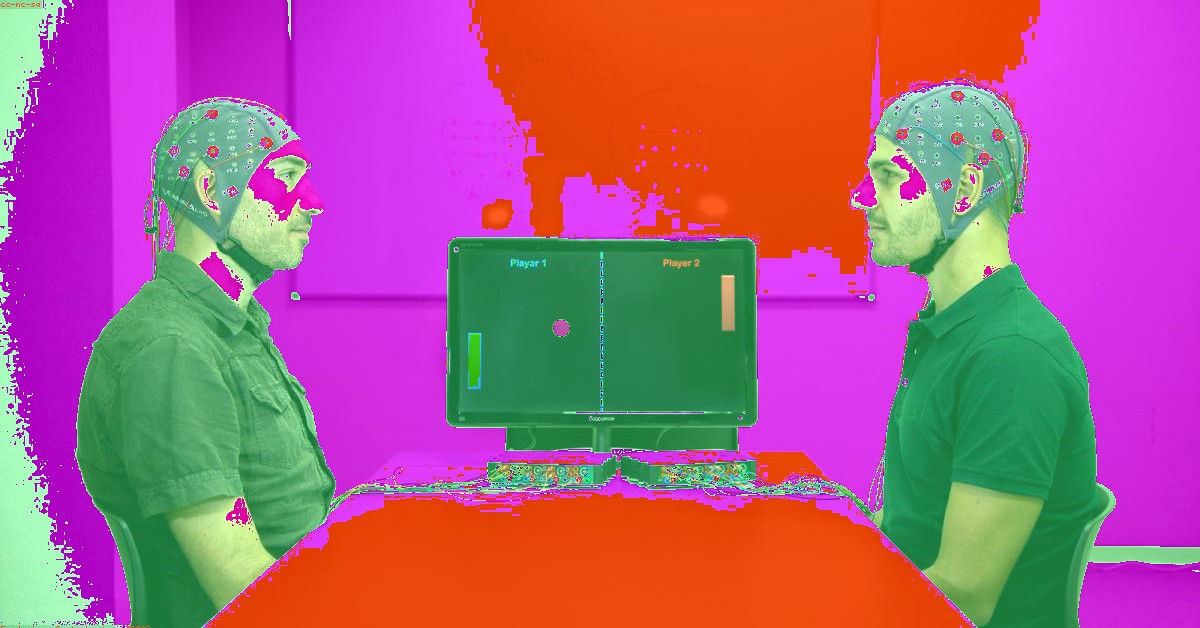
On the other side, companies like NextMind (acquired by Apple), Emotiv, and Neurosky have focused on external sensors—headbands, caps, or earbuds. They promise what the invasive camp cannot: accessibility. No surgery, no recovery, no risk. You can buy a headset online and start using it today.
But here’s the rub: non-invasive signals are muddy. The skull scatters electrical signals. The hair and skin create noise. At best, you get a fuzzy picture of broad brain states—attention levels, relaxation, or yes/no commands. That’s enough for basic gaming or wellness apps, but not for controlling a prosthetic hand or typing 40 words per minute. The user experience is often frustrating, leading to high churn and low retention. Revenue teams at these companies have consistently struggled to justify premium pricing because the value proposition is so narrow.
So the industry had a choice. They could ship products that work for millions of people at low resolution, accepting that the experience would be mediocre. Or they could wait, invest in signal processing breakthroughs, and launch high-resolution solutions that truly wow users—even if that means serving a smaller group of early adopters. They chose the latter.
Why The Industry Paused Scale
This decision wasn’t made in a vacuum. It came from a careful analysis of user behavior and market dynamics. Let’s look at the key factors.
Minimum Viable Quality Thresholds
There’s a concept in product design called the “minimum viable quality” (MVQ)—the level of performance below which a product feels like a gimmick and above which it feels essential. For BCI, the MVQ is high. If a user can’t reliably control a cursor on a screen 95% of the time, or if the system requires constant recalibration, they will abandon it. Early non-invasive systems consistently failed this test. Users would get excited, try the headset, and then be frustrated by latency, false positives, or the need to sit perfectly still.
The industry recognized that engaging millions of users with a subpar experience would burn the trust needed for long-term adoption. Instead of scaling fast and failing hard, neurotech decided to scale slow and win deep.
Investment in Signal Processing and AI
The last five years have seen a quiet revolution in signal processing. Advances in machine learning, specifically deep learning and temporal convolutional networks, have dramatically improved the ability to extract meaning from noisy neural data. Companies like Paradromics and Kernel are using custom algorithms to decode brain signals with fewer electrodes, achieving higher resolution from less invasive setups.
For example, recent work from researchers at the University of Texas demonstrated that by training neural networks on large datasets of brain activity during speech, they could decode intended speech with 97% accuracy using just a few electrode arrays. This is orders of magnitude better than a decade ago. Signal resolution isn’t just about hardware anymore; it’s about software.
Regulatory and Ethical Guardrails
Another reason scale was paused: regulators and ethicists pushed back. The FDA and European equivalents have been cautious about approving BCI devices for mass use, especially invasive ones. There’s a legitimate concern about data privacy (your thoughts being recorded?), long-term safety (implant rejection or glial scarring), and equity (who gets access to cognitive enhancement?). The industry had to engage in a prolonged regulatory negotiation that slowed time-to-market but ensured that when products do launch, they meet high standards.
This is a classic B2B lesson: when building for regulated markets, compliance is a feature, not a bug. The companies that invest in regulatory clarity build durable moats. The ones that rush to market often face recalls, lawsuits, and lost trust.
What This Means for B2B GTM and Revenue Teams
If you’re a revenue leader in neurotech—or adjacent fields like medtech, AI, or hardware—the “signal over scale” decision has practical implications.
1. Your ICP Is Narrower Than You Think
Stop trying to sell to everyone. The early market for high-resolution BCI is severely impaired patients—those with ALS, spinal cord injury, stroke, or locked-in syndrome. These are not millions, but tens of thousands. Yet each user in this segment is worth enormous value. They will pay for functionality that restores communication or mobility. Your total addressable market (TAM) is small today, but your serviceable addressable market (SAM) within that niche has huge willingness to pay.
2. Sales Cycles Are Longer—And That’s Okay
Revenue teams used to SaaS churn models will struggle with BCI because the buying journey involves hospitals, ethics boards, insurance, and patient advocacy groups. It’s a multi-stakeholder sale. But the AOV (average order value) per unit can be in the tens of thousands of dollars. Smart sales leaders are building consultative sales processes that educate neurosurgeons and rehabilitation centers on clinical outcomes, not just product specs.
3. Content Strategy Must Focus on Outcomes, Not Features
Don’t market “256-channel electrode array.” Market “restores ability to text your family.” B2B buyers in this space care about measurable clinical metrics: reduction in caregiver hours, increase in communication speed, improvement in quality of life scores. Every blog post, case study, and white paper should include concrete data points that illustrate the resolution advantage.
4. Partners Over Direct Sales
Given the complexity, most BCI companies are partnering with existing medtech distribution networks, research hospitals, and assistive technology providers. Your GTM motion should be channel-led, not direct. Build partner enablement programs that help these intermediaries understand signal resolution as a competitive differentiator.
The Path to Millions
Make no mistake: BCI will reach millions. The genie is out of the bottle. But the path is longer and more deliberate than the hype suggested. The industry chose resolution over reach because a great product for a few people builds a foundation for a good product for many. Once signal processing and less invasive techniques cross the MVQ threshold—likely within the next 5–10 years—the floodgates will open.
For now, the smart money is on depth. Build the best high-resolution system for the most desperate patients. Win clinical approval. Publish peer-reviewed outcomes. Then expand to broader use cases as the technology matures.
The limitation was never ambition or compute. It was signal resolution. And the industry made the hardest decision: to fix the bottleneck before scaling the business.
That’s a decision any revenue team can learn from. It’s better to build a product that a thousand people love than one that a million people tolerate. For BCI, love starts with clarity. And clarity starts with signal.
This article originally appeared in B2Pulse, the growth-focused publication for revenue teams building in SaaS, medtech, and frontier technology sectors.