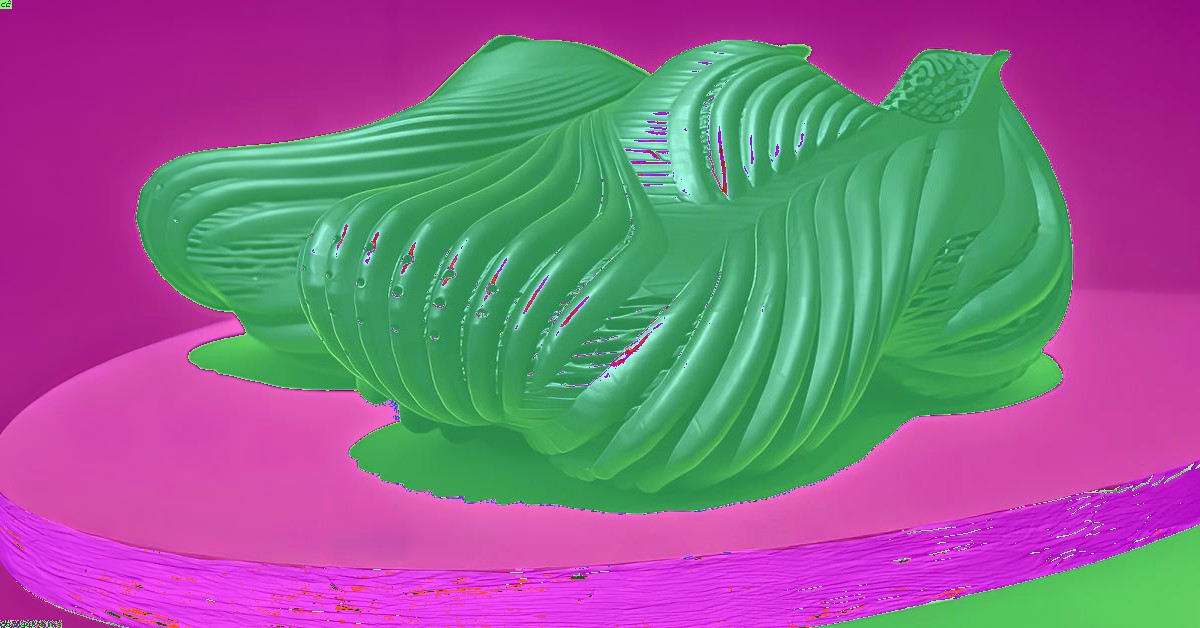
Why Your Shoes Are Hurting You (And How 3D Printing Could Save Your Feet and the Planet)
Every time you lace up a pair of sneakers, you’re making a silent trade-off. Comfort? Possibly. Support? Maybe. But at what cost? The global footwear industry churns out billions of pairs each year, and most of them end up in landfills—alongside the health of our feet.
Mass-produced shoes are not just wasteful. They’re broken. Literally and figuratively. The one-size-fits-all approach has turned a simple act of walking into a health hazard. And the planet is paying the price.
But what if the solution wasn’t a smaller size, a wider fit, or a new brand? What if you could have a shoe built specifically for your foot, your gait, your life? Enter 3D printed custom footwear—a technology that promises to fix both the environmental mess and the biomechanical pain.
As the co-founder of Vivobarefoot recently put it: “Mass produced shoes are creating waste, ending up in landfill and damaging our feet. Custom 3D printed shoes are the answer.”
Let’s break down why traditional footwear production is broken, how it’s harming our feet, and whether 3D printing can really rewrite the rules—for our bodies and the planet.
The Dirty Secret of Traditional Footwear
The Numbers Are Ugly
The footwear industry is massive—over 24 billion pairs of shoes are produced globally each year. But here’s the kicker: most of them are made using manufacturing processes designed for speed and scale, not for sustainability or human health.
- Waste by design: Traditional shoemaking relies on cutting, molding, and stitching. This creates significant material waste. For a single pair of sneakers, up to 30% of the raw materials (rubber, foam, textiles) can end up as scrap.
- Landfill bound: An estimated 90% of footwear ends up in landfills, where synthetic materials like EVA foam and polyurethane can take hundreds of years to decompose.
- Carbon footprint: The average pair of shoes generates roughly 13–15 kg of CO2 emissions, depending on materials and production location.
The Hidden Cost: Discomfort and Injury
Beyond the environmental toll, mass-produced shoes are designed for the “average” foot—which doesn’t actually exist. Feet come in wildly different shapes, widths, arch heights, and mobility patterns.
- Poor fit equals poor health: Ill-fitting shoes can cause blisters, bunions, plantar fasciitis, and even long-term joint damage.
- Zero adaptability: A shoe built on a last (the 3D mold used for production) is static. It doesn’t account for how your foot expands during the day or how your gait shifts.
- The “standard size” myth: Brands use generic sizing charts, but anything off the bell curve—like a wider forefoot, a narrower heel, or a high instep—is left out in the cold.
We end up sacrificing our natural foot mechanics for fashion and convenience. But that’s not the only problem.
How Modern Shoes Are Destroying Your Feet
The Great Cushioning Illusion
We’ve been taught that more cushioning equals better protection. But study after study suggests the opposite: overly cushioned, rigid shoes change your natural gait. They reduce sensory feedback from the ground, weaken foot muscles, and encourage a heavier heel strike.
- Foot weakness: When you rely on thick soles for shock absorption, your foot’s intrinsic muscles—designed to do that work naturally—atrophy.
- Biomechanical chaos: A 2016 study found that people who run in minimal shoes have stronger foot arches and less injury risk than those in maximalist shoes.
- The barefoot movement: Brands like Vivobarefoot champion a “natural” approach—thin, flexible soles that let your foot move as intended. But they’ve also struggled to scale their mission without custom solutions.
Why One-Size-Fits-All Is a Lie
Your foot is a unique, dynamic structure. It changes volume throughout the day due to heat, humidity, and activity. Mass-produced shoes don’t account for this.
- Pressure points: You might have a high arch that creates a painful hotspot, or a low arch that needs support. Generic lasts can’t adapt.
- Gait variability: Some people pronate, others supinate. A shoe that works for a neutral gait can do damage to someone with a different stride.
- Long-term damage: The cumulative effect of poor-fitting shoes over decades can lead to knee, hip, and back problems.
The result? We’re paying for shoes that don’t actually fit—and then paying again for physical therapy.
Enter 3D Printing: The Cure for Both Problems
Customization at Scale
3D printing, also known as additive manufacturing, builds objects layer by layer from a digital file. In footwear, this means you can create a shoe that’s tailored to your exact foot geometry—no more guesswork.
- Scan to print: A 3D scan of your foot captures every ridge, curve, and pressure point. That data becomes the blueprint for your sole.
- Perfect fit: The midsole, insole, and even the upper can be customized for your arch height, foot width, and gait pattern.
- Adaptive design: Because the design is digital, you can iterate quickly. Need more flexibility in the forefoot? Less cushion in the heel? Done.
Eliminating Waste
3D printing is inherently less wasteful than traditional manufacturing.
- Additive vs. subtractive: Instead of cutting away material, you only deposit what’s needed. This can reduce material waste by up to 90% per shoe.
- On-demand production: No more overstock. Shoes are printed only when ordered, eliminating the need for massive warehousing and markdowns.
- Material innovation: 3D printers can use biodegradable materials, recycled plastics, or even plant-based resins. This opens the door to circular production—where your shoe can be ground down and reprinted into a new one.
Better for Your Feet, Better for the Planet
Here’s the magic: When you have a custom fit, you reduce friction and injury risk. You also extend the life of your shoes—because they actually work for you.
- Fewer replacements: If your shoe fits perfectly and supports your foot correctly, you won’t replace it every season.
- Lower injury costs: Custom footwear reduces the incidence of running injuries by up to 50% compared to off-the-shelf shoes, according to some early studies.
- Less landfill: Fewer shoes bought and trashed means fewer shoes in the dump.
Who’s Already Doing It?
Vivobarefoot and the Custom Movement
Vivobarefoot has been a poster child for the barefoot shoe movement, but they’ve now partnered with 3D printing companies to create fully custom footwear. Their vision: “We believe the future of footwear is custom, circular, and regenerative.”
Their process involves scanning your feet, building a digital model, and printing the sole directly onto the upper. The result is a shoe that adapts to your foot’s natural shape—and can be recycled when you’re done.
Nike, Adidas, and the Big Bet
Major brands are also investing heavily.
- Adidas Futurecraft 4D: Uses digital light synthesis to print midsoles with variable density zones. It’s mass custom—but not yet fully individual.
- Nike Zoom Vaporfly: While not fully printed, they’ve experimented with 3D printed prototypes for elite athletes.
- New Balance: Their TripleCell technology prints midsoles that are softer under the heel but firmer in the forefoot, tailored for specific running styles.
But the real opportunity lies in full customization—not just a pre-programmed pattern, but a shoe built for your foot.
The Challenges Ahead
Cost and Scale
Right now, 3D printed shoes are expensive. A pair can cost $500–1,000, compared to $100–150 for a standard model. That’s prohibitive for the mass market.
- Print speed: Industrial printers can produce a single shoe in 30–60 minutes. That’s slow.
- Material costs: High-quality, durable, flexible printing filaments are still costly to produce.
- Infrastructure: Every print shop needs specialized equipment, software, and skills.
Consumer Education
Most people don’t think about their feet until they hurt. Changing the mindset from “one shoe fits all” to “custom is normal” will take years—and major marketing muscle.
- Trust in brands: Consumers need to believe that a 3D scanned shoe will be as durable and stylish as a traditional one.
- Sustainability stigma: “Eco-friendly” is often seen as a compromise on performance. Brands must prove that custom is better, not just greener.
Regulatory Hurdles
Footwear safety standards—like slip resistance, fire compliance, and durability—vary by region. 3D printed materials may need new approvals and certifications, which slows adoption.
But the Future Is Inevitable
Despite the hurdles, the trajectory is clear. Here’s why:
- Consumer demand for personalization is exploding. From skincare to nutrition, people want products that fit them.
- Environmental regulation will tighten. Single-use plastics, waste-intensive industries, and carbon-heavy supply chains are on notice.
- Material science is advancing fast. Bio-based, recycled, and compostable filaments are becoming cheaper and stronger.
- 3D printing technology is accelerating. New printers can produce parts in minutes instead of hours. Multi-material printing is now possible.
In 10 years, buying off-the-rack shoes might feel as outdated as buying a CD.
The Bottom Line: You Need a Shoe That Works for You
The footwear industry is broken. It’s producing waste at a terrifying rate, and it’s making our feet weaker. But we’re at the start of a transformation.
Custom 3D printed shoes aren’t a gimmick—they’re a solution to an endemic problem. They offer a way to keep the planet healthy while healing our feet at the same time.
If you’re tired of blisters, bunions, or just tired of buying shoes that don’t fit, pay attention. The technology is here. The vision is real. And the first brands—like Vivobarefoot—are already showing what’s possible.
Your feet don’t have to suffer for fashion. And the planet doesn’t have to pay the price for your shoes.
It’s time to print something better.
Ready to rethink your footwear? Start with a foot scan. Even if you’re not buying custom today, understanding your foot’s unique shape is the first step toward making smarter, healthier choices.