Deep Sea Gold Rush: 1,121 New Species Discovered in Landmark Ocean Census Expedition
H1: 1,121 New Ocean Species Uncovered: What the Deep Sea Discovery Means for Science and Business
If you think we’ve mapped every corner of our planet, think again. In a single year, scientists participating in the Ocean Census initiative have identified 1,121 new marine species – and that’s just the beginning. From deep sea ghost sharks to symbiotic worms and unusual crustaceans, this landmark exploration is rewriting what we know about life beneath the waves.
But here’s the real question for B2B leaders: Why should a SaaS or tech sales executive care about a bunch of underwater critters?
Because the principles behind this discovery – rapid scaling of data collection, collaboration across silos, and turning unknown variables into predictable outcomes – are exactly what high-performing revenue teams need to master. Let’s dive in.
The Ocean Census: A Playbook for Scaling Discovery
The Ocean Census initiative isn’t your typical marine biology project. It’s a global, coordinated effort designed to accelerate species discovery by an order of magnitude. Think of it as the GTM (go-to-market) strategy for ocean science.
Here’s what happened: Over the course of 12 months, researchers across multiple institutions pooled resources, standardized data collection protocols, and deployed cutting-edge tech – from autonomous underwater vehicles to AI-powered image recognition – to survey previously unexplored depths.
The result? A staggering 1,121 new species, including:
- Deep sea ghost sharks (Chimaeras) – elusive creatures rarely seen alive
- Symbiotic worms that live in extreme environments around hydrothermal vents
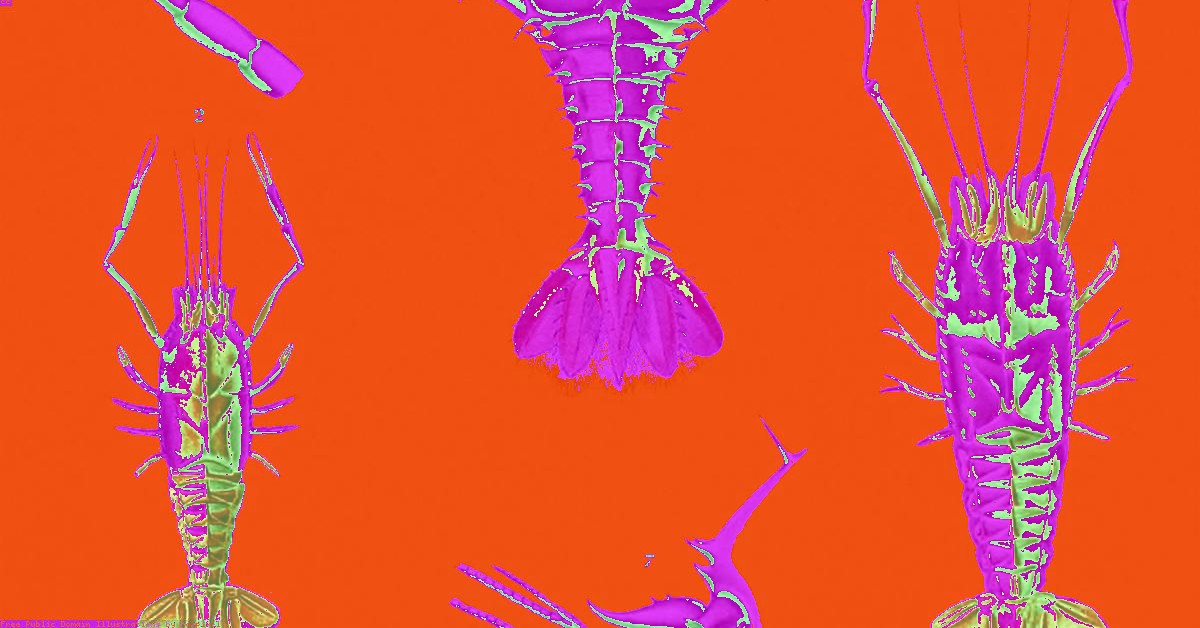
- Unusual crustaceans with adaptations that defy traditional taxonomy
That’s roughly 3 new species every single day.
Key takeaway for B2B leaders: When you systematize exploration and eliminate institutional bottlenecks, you unlock exponential growth. The same principle applies to prospecting, product development, and market expansion.
Why 1,121 New Species Matters Beyond Science
At face value, discovering weird-looking fish might seem like niche entertainment for nature docs. But here’s the strategic angle:
1. Biodiversity = Risk Mitigation
Every new species represents a potential solution to real-world problems. Deep sea organisms produce enzymes that could revolutionize pharmaceuticals, materials science, or even industrial processes. For B2B companies, this is a warning: The unknown isn’t irrelevant; it’s a source of competitive advantage you haven’t tapped yet.
2. Data Standardization Pays Dividends
The Ocean Census succeeded because researchers agreed on common data formats, shared repositories, and standardized imaging protocols. Without that infrastructure, those 1,121 species would still be swimming in obscurity.
Your GTM playbook: How many leads or product features are “hiding” because your CRM, sales tooling, and customer success data don’t speak the same language?
3. Speed Beats Certainty
Traditional taxonomy could take years to classify a single specimen. The Ocean Census compressed that to months by using AI-assisted identification and parallel workflows. They traded “perfect” classification for rapid cataloging and iterative refinement.
Actionable insight: In sales, the obsession with perfect data often kills momentum. Ship the MVP pipeline. Classify later. Prospect now.
Lessons from Deep Sea Ghost Sharks for Revenue Teams
Let’s zoom in on one specific discovery: the deep sea ghost shark (Chimaera). These creatures exist at depths of 2,000+ meters – zones we previously assumed were biologically sparse. Turns out, they’re thriving in what we thought were wastelands.
Three analogies for B2B growth leaders:
a) Your “unlikely” segments are goldmines
How many accounts or verticals have you dismissed as “too small” or “too niche”? The ghost shark proves that life exists – and prospers – in overlooked places.
b) Visibility requires the right tools
You can’t see a ghost shark from a surface vessel. You need submersibles and sonar. Similarly, you can’t spot hidden revenue opportunities with a basic lead list. Invest in signal detection, intent data, and account mapping.
c) Adaptability is a survival trait
Ghost sharks have evolved bioluminescent organs and unique reproductive strategies. Your sales process needs that same flexibility. One rigid playbook won’t work across every ICP (Ideal Customer Profile).
The Symbiotic Worm Strategy: Collaboration Compounds Results
Another standout discovery – symbiotic worms living near hydrothermal vents – reveals a powerful truth: no organism succeeds alone. These worms host bacteria that convert toxic chemicals into energy. Without that partnership, both die.
The B2B parallel: Your revenue engine needs symbiotic relationships between sales, marketing, product, and customer success. When they operate in isolation, you get friction, churn, and missed targets. When they coordinate, you get compound growth.
How to build your symbiotic system:
- Implement a shared revenue dashboard (not separate tools for each function)
- Create cross-functional “vent teams” for high-value accounts
- Align incentives around retention and expansion, not just new logos
The Ocean Census didn’t just discover 1,121 species; it demonstrated that cross-institutional collaboration yields results no single lab could achieve. Your GTM strategy should echo that.
From Taxonomy to Territory: Scaling Your Own Ocean Census
You don’t need a research vessel or a deep-sea submersible to apply these lessons. Here’s a practical framework:
Phase 1: Catalog What You Don’t Know
Just as the Ocean Census mapped unexplored ocean zones, map your market blind spots. Which segments have zero engagement? Which product features go unused? Which competitors are eating your lunch in accounts you don’t target?
Tooling tip: Use AI-powered enrichment tools to surface hidden patterns in your CRM data.
Phase 2: Standardize Your “Collection Protocols”
The initiative succeeded because every team used common methods. Your revenue team needs the same:
- Consistent lead scoring definitions
- Unified data fields across platforms
- Shared terminology for stages and outcomes
Phase 3: Parallel Process for Speed
Don’t wait for perfect data to act. Run multiple prospecting experiments simultaneously. Test new ICPs. Launch new outreach sequences. Measure, iterate, and discard what doesn’t work.
Phase 4: Publish Your Findings
The Ocean Census makes all species data publicly available. That transparency builds credibility and accelerates global research. Your company can do the same by sharing market insights, benchmarks, and playbooks internally – and selectively with prospects to establish thought leadership.
The Numbers That Should Scare (And Excite) You
Let’s contextualize those 1,121 species:
- That’s more new species than were discovered in the entire 19th century in some marine taxa
- It represents a 30% increase in known deep sea species from several key families
- The AI-assisted identification accuracy hit 92% within just three months of training
For comparison: Most B2B companies analyze fewer than 50 market variables when entering a new vertical. The Ocean Census analyzed thousands of environmental factors per specimen.
The gap: Your data infrastructure is likely underpowered. If marine biologists can process terabytes of sonar data per week, your sales team should be able to handle 5,000 accounts with proper enrichment and automation.
What Happens Next – And Why You Should Care
The Ocean Census isn’t stopping at 1,121 species. The initiative plans to catalog 100,000 new marine species over the next decade. That’s a 10x acceleration from historical rates.
Your takeaway: The pace of change in your market is accelerating too. New competitors, new buyer behaviors, and new technologies emerge faster than ever. If you don’t have a systematic discovery engine – a way to continuously uncover new opportunities – you’ll fall behind.
Action Plan for B2B Leaders
Here’s your immediate checklist, inspired by the Ocean Census playbook:
- Audit your “dark data” – What information exists in your CRM, support tickets, or product logs that you’ve never analyzed?
- Implement a standard taxonomy – Get marketing, sales, and CS to agree on exact definitions for “qualified lead,” “active opportunity,” and “expansion risk.”
- Run a 90-day discovery sprint – Dedicate one team to exploring a completely new segment or use case, with no revenue pressure. Measure learning velocity, not closed deals.
- Invest in tooling that scales – Just as the Census uses AI for species ID, use AI for lead scoring, sentiment analysis, and predictive churn modeling.
- Share findings cross-functionally – Create a “species registry” of insights discovered during prospecting, demos, and churn conversations.
The Bottom Line
The discovery of 1,121 new ocean species isn’t just a scientific milestone. It’s a case study in how to explore, catalog, and exploit unknown territory at scale. For B2B leaders, the lesson is clear: The deepest parts of your market are still unmapped. The ghost sharks and symbiotic worms of revenue growth are waiting – but only if you build the systems to find them.
Stop fishing in shallow waters. Deploy your submersibles. The next 1,121 opportunities are out there.
Interested in learning how to apply deep sea exploration principles to your own GTM strategy? Subscribe to B2Pulse for weekly playbooks, data-driven insights, and actionable frameworks designed for high-growth revenue teams.