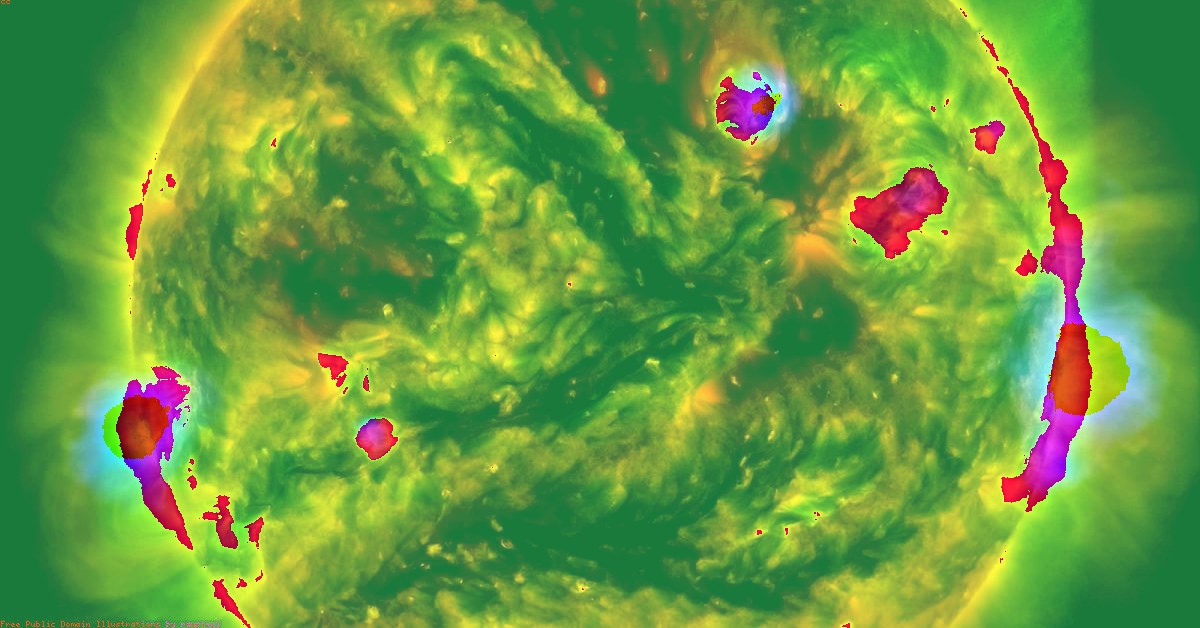
The Biggest Sunspot Region in Years Is Now Facing Earth: Aurora Forecasts Spike After May 22
If you’ve been watching the night sky for the past decade hoping to catch a glimpse of the northern lights but always seemed to miss the show, now is your moment. The European Space Agency’s Solar Orbiter has just revealed images of a massive sunspot region on the far side of the sun that is now turning directly toward Earth. According to the latest data, this immense solar activity is expected to generate significant geomagnetic storms starting around May 22, boosting the likelihood of vivid auroras across multiple continents.
For B2B leaders, sales teams, and growth-minded professionals, this is more than just a cosmic spectacle—it’s a real-world example of how data-driven forecasting, cross-agency collaboration, and timely content can turn a natural phenomenon into a business opportunity. But first, let’s break down exactly what’s happening with the sun, the science behind the forecast, and what you can actually expect to see in the sky.
What Makes This Sunspot Region So Extraordinary?
Sunspots are dark, cooler areas on the sun’s surface caused by intense magnetic activity. They are often the birthplace of solar flares and coronal mass ejections (CMEs)—massive expulsions of plasma and magnetic field lines that can travel millions of miles into space. When these CMEs interact with Earth’s magnetic field, they trigger geomagnetic storms, which in turn fuel auroras at the poles.
The sunspot region recently photographed by the European Space Agency’s Solar Orbiter is not just any sunspot. It is being described as the “biggest sunspot region in years” —and for good reason. Early images from the far side of the sun show an area spanning several times the width of Earth, packed with concentrated magnetic activity.
Here’s why this matters: The last time a sunspot cluster of this magnitude faced Earth was during Solar Cycle 24’s peak in 2014. Since then, solar activity has been relatively subdued. But now, as we approach the anticipated peak of Solar Cycle 25 (expected in 2025), the sun is waking up with a vengeance.
Key Numbers You Need to Know
| Metric | Value |
|---|---|
| Date of Sunspot Emergence from Far Side | Mid-May 2025 |
| Expected Geomagnetic Storm Start | May 22, 2025 |
| Estimated Sunspot Complexity | Beta-Gamma-Delta (high flare potential) |
| Solar Cycle | 25 (rising toward predicted 2025 peak) |
| Instrument Used | ESA Solar Orbiter — Far-Side Imaging |
The size and magnetic complexity of this region suggest it could produce multiple M-class and even X-class flares—the strongest category—over the next two weeks.
The Solar Orbiter’s Role: Why Far-Side Detection Is a Game Changer
The European Space Agency’s Solar Orbiter is currently in a unique elliptical orbit around the sun. Because it can capture images of the sun’s far side—the portion not visible from Earth—it provides a crucial early warning system for potential space weather events.
In this case, the Orbiter’s cameras detected the enormous sunspot region days before it rotated into Earth’s view. This lead time is invaluable for:
- Power grid operators: They can prepare for potential voltage fluctuations or blackouts.
- Satellite operators: They can postpone sensitive maneuvers or place spacecraft in safe mode.
- Airline and aviation companies: They can reroute polar flights to avoid increased radiation exposure.
- Aurora chasers and tourism operators: They can plan viewing events, sell packages, and produce content.
For growth-focused teams in the B2B space, this is a textbook case of predictive intelligence—the same principle that helps you identify market shifts, churn risk, and upsell opportunities before they happen.
What to Expect After May 22: Aurora Forecast and Visibility
Starting on or around May 22, Earth will be directly in the path of the plasma and magnetic field lines ejected from this sunspot region. The National Oceanic and Atmospheric Administration (NOAA) and other space weather agencies are already issuing preliminary forecasts.
Timeline of events:
- May 22–24: First wave of CMEs likely to reach Earth. Geomagnetic storm levels could reach G2 (Moderate) to G3 (Strong) on the 5-point scale.
- May 25–28: Potential for continued activity as the sunspot region remains squarely aimed at our planet. If further flares occur, storm levels could escalate to G4 (Severe) .
- After May 28: The sunspot will gradually rotate away from Earth. However, residual effects may persist for a few more days.
Where to see the Northern Lights
Typically, auroras are confined to high-latitude regions (Alaska, Canada, Scandinavia). But during strong geomagnetic storms, the aurora oval expands southward. Based on current projections:
- Alaska, Canada, Northern Europe: Excellent chance of intense, colorful displays
- Northern United States (Minnesota, Wisconsin, Michigan, Washington, Montana, North Dakota): Good potential for visible aurora on the northern horizon
- Mid-latitudes (Oregon, Colorado, Illinois, New York): Possible brief appearances during the strongest storm phases
- Southernmost reach: Under extreme conditions, sightings have been recorded as far south as Nevada and Oklahoma
Pro tip: For the best view, go to a dark-sky location away from city lights, look north, and use a camera with a long exposure (10–20 seconds). Smartphones with night mode are also capable of capturing aurora during stronger events.
The Business Angle: How to Turn Solar Activity into B2B Growth
Now, let’s shift from the sky to the bottom line. As the editor of B2B Pulse, I see this event as a massive content and engagement opportunity for any SaaS or tech company—especially those in the predictive analytics, data visualization, aerospace, energy, or travel sectors.
Here are three actionable playbooks:
Playbook 1: Real-Time Data Dashboards
If your product involves data aggregation or visualization, create a public-facing aurora probability dashboard that updates with real-time space weather data. Embed it in blog posts, social media shares, and newsletters. Use this as a lead magnet to capture email addresses. The event is temporary, but the engagement can be lasting.
Playbook 2: Thought Leadership on Predictive Forecasting
Use the Solar Orbiter’s early detection as a case study in your marketing. Write a piece like: “What Auroras Teach Us About Churn Prediction: How Pre-Event Data Can Save Your Revenue.” Draw parallels between solar forecasts and your own product’s ability to predict customer behavior.
Playbook 3: Event-Driven Email Campaigns
Build a drip campaign around the May 22–28 window:
- Day 1: “The Biggest Sunspot in Years Is Here—What It Means for Your Business (and the Sky)”
- Day 3: “How to Prepare Your Infrastructure for Geomagnetic Storms (Just Like You Prepare for Market Shifts)”
- Day 5: “Did You See the Aurora? Here’s What It Taught Us About Predictive Growth”
Keep the tone energetic, forward-thinking, and actionable—exactly what B2B buyers expect from you.
What This Means for the Future of Solar Cycle 25
The current event is a powerful reminder that Solar Cycle 25 is building momentum. Researchers predict a peak in 2025, with sunspot numbers potentially rivaling—or even exceeding—those of Cycle 24. If this large region is any indication, we are in for a ride.
Here’s what to watch for in the coming weeks:
- Multiple CME impacts: This sunspot may produce several eruptions, resulting in repeated geomagnetic storms.
- Increased radio and GPS interference: Airlines, shipping, and logistics companies should monitor space weather alerts.
- Better preparedness: The more visible and predictable these events become, the more industries will invest in space weather monitoring tools—creating a growth vector for relevant B2B solutions.
Why This Matters for B2B Revenue Teams
As a former VP of Sales turned content strategist, I’ll tell you this: relevance is everything. The market is saturated with generic articles about “5 Ways to Increase Pipeline.” But when a rare, data-rich event like this occurs, you have a chance to stand out by connecting it to your customers’ real-world challenges.
Imagine you sell cybersecurity software. Geomagnetic storms can disrupt satellite communications and cause power grid fluctuations—both of which are threats to enterprise data centers. You can write a piece titled: “Why Your Data Center Needs to Prepare for the May 22 Aurora Storm (Before It’s Too Late).”
Imagine you sell sales engagement software. You can write: “The Aurora as a Lead Generation Trigger: How to Use Real-World Events to Schedule Your Next Campaign.”
The connection may seem tangential, but in a sea of noise, the unexpected angle is what earns clicks, shares, and trust.
Final Thoughts: Don’t Just Watch the Sky—Engage with It
The biggest sunspot region in years is now pointing directly at Earth. Starting May 22, the aurora borealis and aurora australis will likely put on a show that people will remember for years. But beyond the visual spectacle, this event is a rich seam of content, conversation, and conversion for B2B teams that act fast.
At B2B Pulse, we’ve always believed that the best content is both educational and actionable. This article is no exception: we gave you the science, the timeline, and the exact locations. Now it’s your turn to turn a cosmic event into a growth play.
Get your cameras ready. Get your dashboards ready. And get ready to capture both the northern lights—and your audience’s attention.
Stay tuned to B2B Pulse for actionable insights at the intersection of data science, sales strategy, and the world around us.