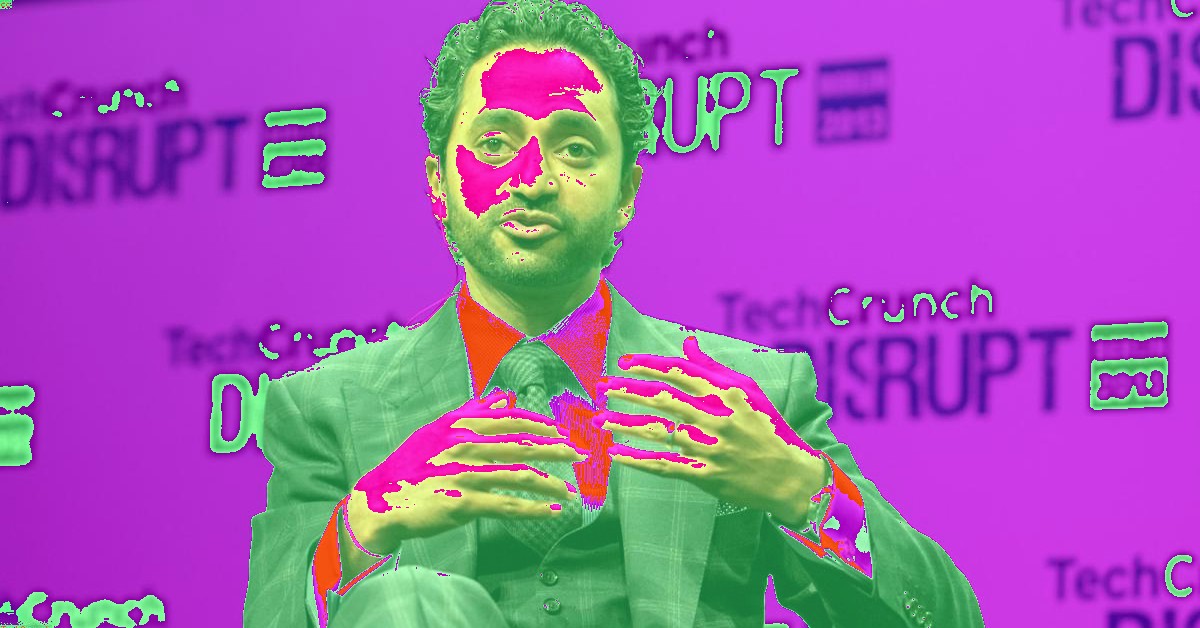
Why Chamath Palihapitiya Is Right: PwC and Accenture Are Handing OpenAI and Anthropic the Keys to Their Kingdom
If you’ve been following the AI gold rush in enterprise consulting, you’ve seen the press releases: PwC partners with Anthropic to train 30,000 consultants on Claude. Accenture teams up with OpenAI to help federal agencies deploy AI. McKinsey invests in OpenAI’s new deployment company, DeployCo.
On the surface, these deals look like smart moves. Consulting firms get early access to cutting-edge AI. Model makers get distribution inside the world’s most influential organizations.
But venture capitalist Chamath Palihapitiya sees it differently. And his warning should make every B2B revenue leader sit up and pay attention.
“If you are running a consulting business and you are deploying Anthropic or OpenAI directly into your organization (I’m looking at you PwC and Accenture) you are letting the fox into the hen house,” Palihapitiya wrote on X on May 17, 2026.
He didn’t stop there. “OpenAI and Anthropic are openly funding and starting competitors to you while also using your usage to drive more success for them. This is not a failure on their part but a failure on your part.”
Here’s the uncomfortable truth: the same AI tools that consulting firms are integrating into their workflows are being used to build the very platforms that will replace them.
The Core Conflict: Partner or Prey?
Palihapitiya’s argument isn’t based on conspiracy theories. It’s based on observable market behavior.
OpenAI recently announced it was forming a new entity called the OpenAI Deployment Company (DeployCo) to help organizations build and deploy AI systems. McKinsey & Company is an investor. This isn’t a licensing deal—it’s a strategic move to insert a model-maker directly into the deployment layer that has traditionally been the consulting industry’s stronghold.
Meanwhile, Anthropic is doing the same. Their expanded strategic alliance with PwC includes a joint Center of Excellence and a program to certify 30,000 professionals on Claude. But Anthropic is also funding and launching its own consulting-like services.
Here’s the math problem for consulting leaders:
- You train your teams on their platforms
- You share your deployment expertise with them
- You hand over your client relationships
- They learn everything about your playbook
- Then they compete with you directly
Palihapitiya called it “a failure on your part.” Harsh? Yes. True? Increasingly hard to deny.
The SaaS Market Has Already Cracked Open
To understand why this matters so much, you need to see the bigger picture Palihapitiya laid out during a recent episode of the “All in Podcast.”
“The low end of the SaaS market is basically finished,” he said. “Thanks to generative AI.”
Think about what that means. For years, SaaS companies built tools that automated tasks for small and mid-market customers. AI is now doing that work natively. No subscription needed. No integration required. Just a prompt.
But here’s the twist: “At the high end of the market where all the action is, what people are finding is, ‘Hey, hold on a second, this is a lot harder than we thought.’”
That’s where the real battle is playing out. Large enterprise deployments require deep domain expertise, change management, compliance, and trust. Exactly the territory consulting firms own.
And exactly the territory OpenAI and Anthropic want to occupy.
Why Consulting Firms Are Prime Targets
Let me break down why consulting firms are especially vulnerable in this dynamic:
1. They are the distribution channel
PwC, Accenture, Deloitte, and McKinsey have relationships with the world’s biggest buyers. Those buyers trust them. When a consulting firm recommends an AI platform, that recommendation carries weight. OpenAI and Anthropic get instant credibility and access without doing the heavy lifting.
2. They train the market at their own expense
Training 30,000 consultants on Claude means PwC is essentially building Anthropic’s workforce. Those consultants become certified advocates. They’ll evangelize Claude to every client they touch. And when Anthropic eventually launches its own consulting arm? Those same consultants become competitors.
3. They share proprietary deployment knowledge
Every engagement with an AI vendor reveals best practices, failure modes, and optimal configurations. That data is gold. And the AI companies are collecting it all. They learn what works and what doesn’t, then build those capabilities into their own offerings.
4. They underwrite the competition’s R&D
When you pay for API access or training bundles, you’re funding the very teams that are building your replacement. The margins on AI model licensing are high. Those profits are reinvested into hiring consultants, building sales teams, and acquiring clients.
Case Study: What’s Already Happening
Look at the timing of Palihapitiya’s warning.
On May 14, 2026, two major deals were announced:
- PwC and Anthropic unveiled an expanded strategic alliance, including the joint Center of Excellence and mass certification program.
- Accenture and OpenAI announced a partnership specifically focused on helping federal agencies deploy AI.
Just three days later, Palihapitiya posted his “fox in the henhouse” warning.
The pattern is clear. Consulting firms are racing to lock in partnerships, but they’re doing so on terms that benefit the AI companies far more than themselves.
Think about it from the AI company’s perspective:
- “We’ll let you use our models, and you help us figure out how enterprises really think about AI.”
- “You train your people on our platform, and we learn everything about your methodology.”
- “You introduce us to your clients, and we build direct relationships with them.”
It’s a brilliant strategy. For the AI companies. For the consulting firms? It’s a long-term liability.
What This Means for B2B Revenue Teams
If you’re running a SaaS company or leading a GTM team, this isn’t just a consulting industry drama. It’s a blueprint for how your own AI partnerships might be setting you up for the same problem.
The Fox in Every Henhouse: A Framework
Here’s a diagnostic tool I’m calling the AI Partnership Trap Assessment:
| Your AI Partner Activity | Your Risk Level |
|---|---|
| They license models to you | Medium |
| They train your team | High |
| They interact with your customers | Very High |
| They launch competing services | Critical |
| They invest in competing firms | Critical |
Every consulting firm that partners with OpenAI or Anthropic is currently at the “Very High” to “Critical” level. And many don’t even realize it.
Three Defensive Moves for Any B2B Company
1. Never let your AI partner meet your customers alone
If a model provider wants to “help” with a client demo, that’s a red flag. You should own the relationship entirely. The AI vendor should be invisible to your end customer.
2. Retain control of deployment expertise
Don’t outsource your implementation playbook. If your AI partner learns exactly how you deploy their models in complex environments, they can replicate that without you. Build your own IP around deployment.
3. Diversify AI partnerships strategically
Don’t bet the farm on one model provider. Use multiple vendors. Build abstractions between your platform and any single AI provider. Make yourself the irreplaceable layer between the model and the customer.
The Real Risk: Trust Erosion
There’s another dimension here that’s easy to miss.
Consulting firms are trusted advisors. Their entire value proposition rests on the belief that they act in their clients’ best interests.
If a client discovers that their consulting partner’s AI vendor is siphoning data, building competing services, and eventually planning to sell directly to that client, what happens to trust?
It evaporates.
And once trust is gone, the consulting relationship is over. The fox doesn’t just eat the chickens. It destroys the entire coop.
Why This Is a “Failure” on Your Part
Palihapitiya didn’t mince words: “This is not a failure on their part but a failure on your part.”
He’s saying that consulting firms should have seen this coming. They should have negotiated better terms. They should have recognized that an AI company that sells models to everyone has different incentives than a consulting firm that sells trusted advice.
The failure is strategic blindness. It’s being so focused on the immediate revenue opportunity that you ignore the long-term competitive threat.
It’s the same mistake newspapers made when they gave away their content to Google and Facebook. It’s the same mistake retailers made when they built their entire business on Amazon’s platform. It’s the same mistake SaaS companies made when they stored their customers’ data on single cloud providers.
History keeps repeating itself. The pattern is always the same: a middleman gets comfortable with a supplier that eventually becomes a competitor.
What Comes Next
We’re still early in this cycle. The consulting firms are in the “honeymoon phase” where the partnerships feel mutually beneficial. Revenue is flowing. Everyone’s happy.
But the signals are already there:
- OpenAI’s DeployCo is designed to bypass consultants entirely
- Anthropic is hiring consultants and building its own deployment capabilities
- The AI companies are collecting data that makes them smarter about enterprise deployment than the consulting firms themselves
Within the next 12 to 24 months, expect to see:
- Direct sales from AI companies to large enterprises, with no consulting middleman
- AI companies acquiring boutique consulting firms for domain expertise
- Consulting firms scrambling to unwind or renegotiate partnership terms
- Lawsuits over data ownership and competitive practices
The smart consulting firms will start hedging now. They’ll build their own AI capabilities in-house, reduce dependency on specific model providers, and restructure partnerships so the AI company can’t poach clients.
The less smart ones will keep signing press release deals, training armies of consultants on someone else’s platform, and wondering why their margins are shrinking.
Revenue Leaders: Your Takeaway
Here’s the actionable insight for anyone leading a B2B company:
Your AI vendor is not your friend. They are a business partner with aligned interests today and divergent interests tomorrow.
The deals you sign now will determine whether you end up stronger or weaker. Every dollar of revenue you generate through an AI partnership should be weighed against the competitive advantage you’re giving away.
If you’re training your team on a specific model. If you’re letting that vendor interact with your customers. If you’re sharing deployment expertise without contractual protection. You’re making the same mistake PwC and Accenture are making.
And one day, someone will call it what it is: a failure on your part.
The Bottom Line
Chamath Palihapitiya’s warning isn’t just about consulting firms. It’s about every company that mistakes a vendor relationship for a strategic alliance.
AI companies are not infrastructure providers like AWS or Salesforce. They are ambitious, well-funded competitors who see the enterprise deployment layer as their next conquest.
They’re building the AI. They’re training the consultants. They’re collecting the data. And soon, if you’re not careful, they’ll be taking your customers.
The fox is in the henhouse. The question is: are you going to lock the door, or keep feeding it?