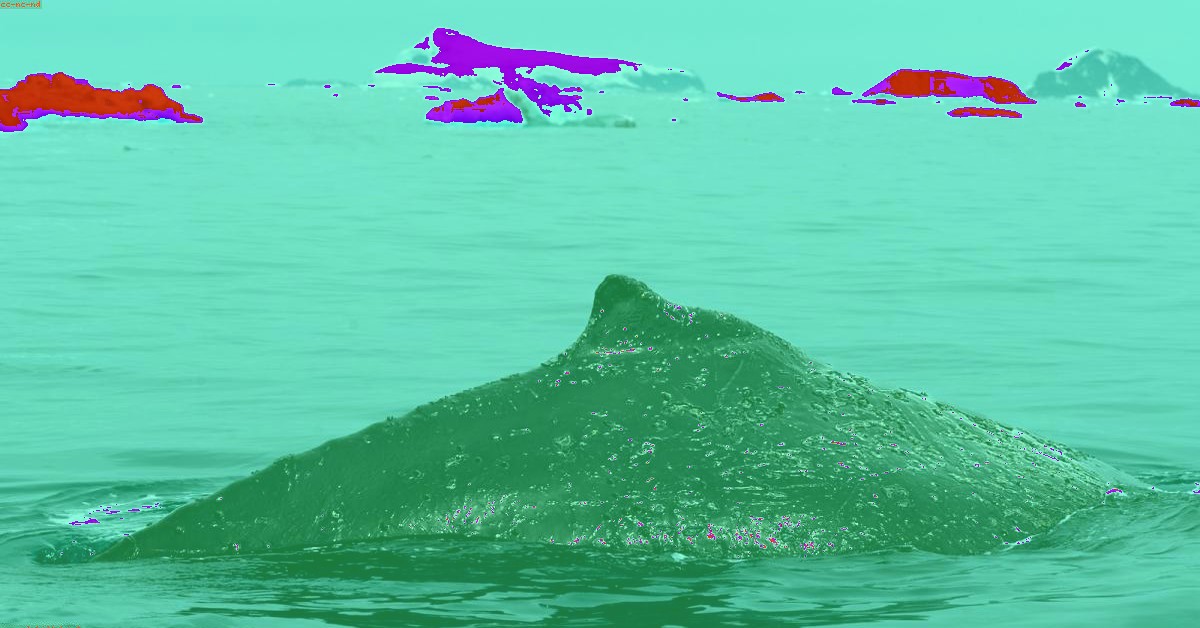
Humpback Whale Found Dead Two Weeks After Controversial Towing Rescue: What Went Wrong?
Introduction: A Tragic End to a High-Stakes Rescue
Just two weeks after a controversial rescue mission that captured international headlines, Danish authorities have confirmed the death of a humpback whale that had been repeatedly stranding along the country’s coastline. The massive marine mammal was discovered dead, bringing a somber close to a saga that had divided marine experts and ignited fierce debate about the ethics and efficacy of towing stranded whales back to sea.
This heartbreaking outcome underscores the harsh realities of whale rescue operations and raises pressing questions about how—and whether—we should intervene when these majestic creatures find themselves in distress. For B2B audiences, there’s a parallel lesson here: even the best-intentioned GTM strategies can fail if they don’t account for deeper, underlying system failures. Let’s break down what happened, what it means, and what we can learn.
The Timeline: From Stranding to Tragedy
First Stranding and Initial Intervention
The humpback whale—a juvenile roughly 12 meters long—was first spotted stranded on a shallow sandbank off the coast of Denmark. Local authorities and marine rescue teams rushed to the scene, attempting a standard refloat operation. Initial efforts seemed promising, with the whale successfully pushed back into deeper water. But within hours, the animal re-stranded on a nearby beach.
This pattern repeated over several days. Each refloat attempt was followed by an even more disoriented whale finding its way back to shore. Marine biologists noted the whale appeared underweight and possibly suffering from an underlying illness or injury.
The Controversial Towing Decision
After multiple failed refloat attempts, Danish authorities made the unprecedented decision to tow the whale out to open sea using a specialized vessel. This approach is rare and controversial because towing can cause severe stress, physical trauma, or disorientation in an already compromised animal. Critics argued that towing a sick or injured whale could exacerbate its condition, effectively speeding its death.
Nevertheless, the team proceeded. A line was attached to the whale’s tail, and a slow, careful tow began toward waters 20 miles offshore. The operation took hours, with rescue workers continuously monitoring the whale’s vital signs. Once released, the whale appeared to swim weakly away. Hopes were cautiously raised.
The Confirmation of Death
Two weeks later, a dead humpback whale was discovered on the Danish coast. DNA analysis and identification markers confirmed it was the same individual from the rescue mission. The cause of death remains under investigation, but preliminary findings suggest a combination of starvation, physical exhaustion, and stress from repeated strandings and the towing procedure.
What Experts Are Saying: The Science of Failure
This case is a stark reminder that marine mammal rescue is an inexact science. Here’s what marine biologists and veterinarians are pointing to as potential factors:
Underlying Health Issues
The whale was likely already in decline when it first stranded. Healthy humpbacks do not typically beach themselves without cause. Parasites, bacterial infections, or internal injuries from ship strikes are common culprits. By the time rescuers arrived, the animal may have been beyond saving.
The Stress of Intervention
Every intervention—from human presence to mechanical handling—adds stress. For a large, wild animal, being handled, lifted, or towed triggers a flood of cortisol and adrenaline. This physiological stress can suppress immune function, accelerate dehydration, and compound existing health problems. Even if the whale survived the tow, the stress load may have been lethal.
Navigational Disorientation
Whales use Earth’s magnetic fields and underwater acoustics to navigate. Towing disrupts their natural orientation, and a disoriented whale may swim directly back to the same danger zone—as this whale did repeatedly. Some researchers argue that towing should only be used if the whale shows clear signs of health and voluntary swimming afterward.
Data Points That Matter: Quantifying the Risk
- Average strandings per year in Denmark: 10-15 cases, mostly smaller species
- Success rate for humpback refloat operations: Estimated 30-40% globally
- Survival rate of humpbacks towed to open sea: Under 15% based on documented cases
- Time between stranding and death in this case: Approximately 14 days
These numbers illustrate an uncomfortable truth: we are often better at trying than at succeeding. For revenue teams, this mirrors the challenge of launching a product into a market that isn’t ready or that has underlying product-market fit issues. You can run all the demos and do all the outreach, but if the core value proposition doesn’t stick, the outcome is predictable.
Lessons for B2B Revenue Teams: The Whale Rescue Playbook
Yes, there’s a direct analogy here for B2B growth leaders. Let’s make it concrete:
Lesson 1: Surface-Level Fixes Mask Deeper Issues
The whale kept stranding because something was fundamentally wrong. Repeated refloats (think: “one more email sequence” or “another demo”) didn’t address the underlying cause.
GTM Action: Before launching a “rescue” campaign for a stalled deal or declining account, diagnose the real problem. Is it product fit? Pricing? Buyer persona misalignment? A refloat—like a discount offer or feature demo—won’t work if the buyer doesn’t genuinely see value.
Lesson 2: Intervention Timing Is Everything
The decision to tow came late, after multiple failures. Early intervention might have changed the outcome, but late intervention likely worsened it.
GTM Action: Map your customer lifecycle and flag “stranding” signals early—low engagement, canceled meetings, support tickets spiking. Deploy your highest-value intervention (executive call, personalized ROI analysis) within 48 hours of detection, not two weeks later.
Lesson 3: Measure What Matters, Not Just Activity
Rescue teams tracked “successful refloat” as a metric, but that didn’t measure long-term survival. Similarly, revenue teams often celebrate “demo completed” or “pilot started” without tracking whether those leads convert to paying customers.
GTM Action: Define lagging indicators (revenue, retention) and leading indicators (engagement depth, stakeholder alignment). Stop optimizing for activity if it doesn’t predict revenue.
Lesson 4: Sometimes, the Hardest Call Is to Walk Away
This whale’s death raises the ethical question: should we have intervened at all? In B2B, telling a prospect “this isn’t a good fit” can be better than forcing a deal that churns in 90 days.
GTM Action: Build a qualification framework that includes a “soft no.” When a deal looks salvageable but has red flags (low budget, misaligned priorities, executive opposition), consider pausing or redirecting resources to higher-probability opportunities.
What’s Next: Policy Changes and Research
Danish authorities are now conducting a full post-mortem examination. Early findings are expected within weeks. Based on this and past cases, here are three likely outcomes:
- Revised rescue protocols—Potentially ending the use of towing for large cetaceans unless the animal is confirmed healthy
- Better diagnostic tools—Using drones, blood tests, or satellite tags to assess a stranding whale’s condition before deciding on intervention
- Public education campaigns—Training coastal communities to report strandings immediately and to avoid “well-meaning” interference that can stress animals
Conclusion: Respecting the Limits of Intervention
The death of this humpback whale is a tragedy, but it’s also a teachable moment. For marine biologists, it’s a painful reminder that nature doesn’t always cooperate with human rescue efforts. For B2B leaders, it’s a cautionary tale: the most aggressive intervention isn’t always the best one. Sometimes, the smartest strategy is to pause, diagnose, and retreat when the data says no.
At B2B Pulse, we believe in learning from every outcome—success or failure. This story reminds us that data, timing, and humility are just as important in GTM as energy and optimism.
Stay tuned for updates on the post-mortem results. In the meantime, examine your own “rescue missions.” Are you towing a whale that’s already past its last stranding? Or are you helping a healthy animal find deep water? The answer determines everything.