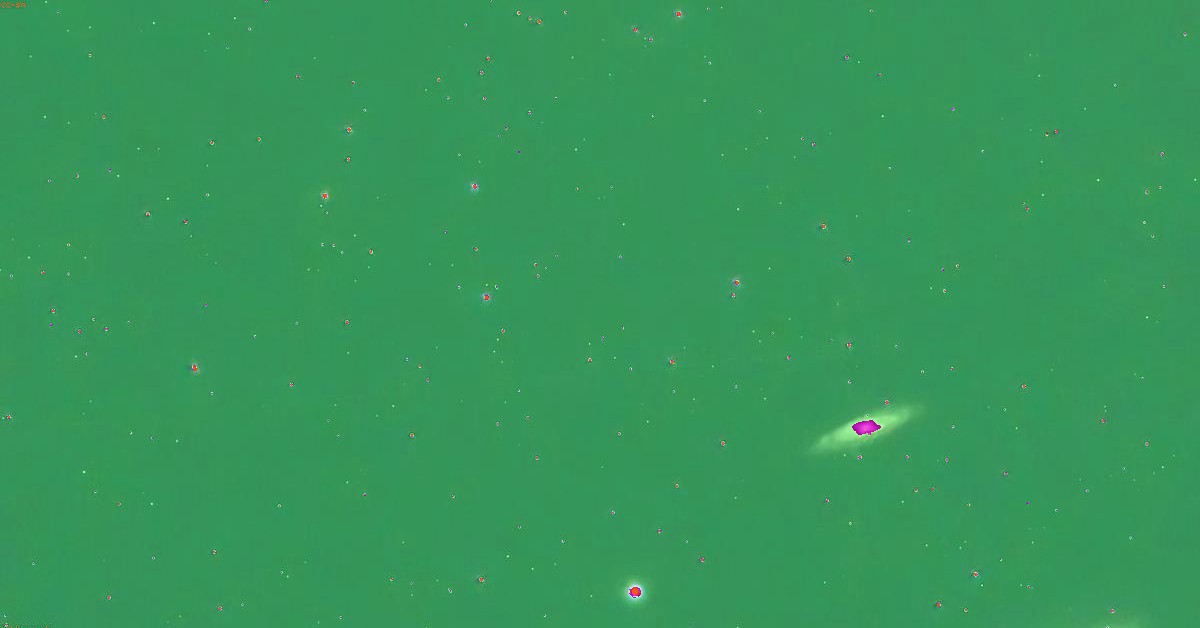
How a Boeing 737-Sized Asteroid Will Buzz Earth Tonight: What You Need to Know
Published on B2B Pulse | May 18, 2026
Imagine a rock the size of a Boeing 737 shooting past our planet at a distance closer than the Moon. That’s exactly what’s happening tonight with Asteroid 2026 JH2. And no, it’s not the plot of a sci-fi movie—it’s real, it’s happening, and it’s a golden opportunity for astronomers and space enthusiasts alike.
At B2B Pulse, we usually talk about revenue teams and SaaS growth. But sometimes, the universe throws a curveball that’s too big (literally) to ignore. Tonight’s flyby isn’t just a headline for science news—it’s a reminder of how close we are to the cosmos and how technology makes even the most distant events accessible. Let’s break down what’s happening, why it matters, and how you can watch it.
The Numbers: Asteroid 2026 JH2 at a Glance
Let’s get the facts straight. According to authoritative sources, Asteroid 2026 JH2 will make its closest approach to Earth on May 18, 2026. Here’s what you need to know:
- Size: Comparable to a Boeing 737 aircraft—roughly 100-130 feet in diameter.
- Distance: It will pass just 56,000 miles from Earth. To put that in perspective, the Moon is about 238,855 miles away. That means this asteroid will be 4.3 times closer than the Moon.
- Time: The flyby occurs tonight, May 18, 2026. Exact timing varies by location, but check local astronomy resources for precise windows.
This is no ordinary near-Earth object (NEO). It’s relatively large, close, and visible—if you know where to look.
Why This Flyby Matters (Beyond the “Wow” Factor)
You might be thinking, “Okay, cool—another space rock. What’s the big deal?” Here’s the context that makes 2026 JH2 special:
1. Proximity Makes It a Scientific Goldmine
Most asteroids that pass near Earth are either too small or too far to study in detail. At 56,000 miles, 2026 JH2 is within range of ground-based radar and optical telescopes. Astronomers can:
- Map its surface using radar imaging.
- Analyze its composition via spectroscopy.
- Determine its rotation rate and stability.
This data helps refine models for future planetary defense—something governments and space agencies take seriously.
2. It’s a Test for Tracking Systems
Every close approach is a stress test for global asteroid detection networks. Tonight’s flyby gives agencies like NASA’s Center for Near Earth Object Studies (CNEOS) a chance to validate their algorithms. If something were on a collision course, these systems need to be flawless. 2026 JH2 is a safe, real-world rehearsal.
3. Public Engagement with Space
Events like this spark curiosity. For educators, amateur astronomers, and even marketers looking for content hooks, this is a rare hands-on moment. The asteroid is bright enough to be seen with amateur telescopes—encouraging people to look up.
Where to Watch: Don’t Miss the Sky Show
You don’t need a NASA budget to see Asteroid 2026 JH2. Here’s your playbook:
Best Viewing Method: Live Streams
The easiest way to catch the flyby is via online live streams. Projects like the Virtual Telescope Project or Slooh will broadcast the event in real-time. Check their schedules for May 18.
Telescope Viewing (If You’re Lucky)
If you have a telescope with at least a 6-inch aperture, you might spot it as a fast-moving star-like object. It won’t look like a Hollywood asteroid—just a faint, streaking dot—but it’s still thrilling.
No Telescope? No Problem.
Even binoculars could work under dark skies. Go somewhere away from city lights, and look for a faint, slow-moving “star.” Use a sky map app like Stellarium to pinpoint its path.
Pro tip: The best viewing window will be a few hours before and after closest approach. Check timeanddate.com for local rise/set times.
What If It Hit? (Spoiler: It Won’t)
Let’s address the elephant in the room. Could an asteroid this size cause damage? Yes—but not in a civilization-ending way. A Boeing 737-sized rock hitting Earth would:
- Create a massive airburst (like the 2013 Chelyabinsk event, which injured 1,500 people).
- Potentially shatter windows over a large area.
- Leave a crater if it struck land.
But 2026 JH2 is not on a collision course. Its trajectory is well-understood and safe. You can sleep peacefully.
From Asteroids to Business: The Revenue Playbook
At B2B Pulse, we can’t resist drawing a parallel. Watching this asteroid is a lot like building a high-growth SaaS company. Here’s why:
1. Precision Matters
Asteroid tracking relies on exact calculations. One degree off could mean missing the flyby entirely. In sales, one wrong metric can sink a quarter. Both require data accuracy.
2. Timing Is Everything
Tonight’s event happens at a specific moment. Miss it, and you wait years for the next approach. In B2B, you miss a market window, and competitors eat your lunch. Act now.
3. Tools Are Your Friend
Astronomers use telescopes, radar, and simulations. Revenue teams use CRM, analytics, and AI. Both succeed by leveraging the right tech stack.
4. It’s About the Journey, Not Just the Destination
The asteroid will pass harmlessly. But the knowledge gained, the public excitement, and the tech validation—that’s the real win. Similarly, a sales call might not close immediately, but the relationship and data gathered drive future revenue.
How to Leverage This Event for Your Business
Are you a SaaS marketer, a founder, or a growth leader? Here’s how to tie this asteroid flyby into your content strategy:
- Create a “Tonight’s Sky” blog post (like this one) that mixes science with your niche. Show your audience you’re forward-thinking.
- Run a social campaign with a countdown: “Asteroid 2026 JH2 is closer than the Moon. Are you ready for your next big approach?”
- Host a live-stream watch party on LinkedIn or YouTube. Invite experts to discuss space, tech, and what it means for business.
- Publish a thought leadership piece on how asteroid detection parallels predictive analytics in sales.
The Bigger Picture: Why Space Matters for Business
Your revenue team might not deal with asteroids daily, but the mindset behind space exploration aligns perfectly with high-growth B2B:
- Risk management: Like tracking NEOs, you need to see threats early—churn, competitors, market shifts.
- Innovation cycles: Space tech pushes boundaries. So should your product roadmap.
- Collaboration: No single agency tracks every asteroid. Your sales team needs cross-departmental alignment too.
Tonight’s flyby is a reminder: The universe is full of opportunities, if you know where to look.
Final Thoughts: Don’t Blink
Asteroid 2026 JH2 will be here and gone in hours. If you’re reading this on May 18, 2026, you’ve got a narrow window to observe it. But the lesson lingers: Seize rare moments, whether in the sky or in your pipeline.
For actionable strategies on growth, GTM, and revenue—stay tuned to B2B Pulse. We’re your co-pilot for the journey.
Share this article with a colleague who loves space, SaaS, or both. And tonight? Look up.
Stay ahead of the curve. Subscribe to B2B Pulse for weekly insights on growth, tech, and the unexpected connections that drive business forward.