Why Post-Quantum Compliance For Banks Starts In Containers
In the rapidly evolving landscape of financial cybersecurity, few threats loom as large as the quantum computing revolution. For banks and credit unions, the clock is ticking: the National Institute of Standards and Technology (NIST) has already finalized its first set of post-quantum cryptography (PQC) standards, and regulators are beginning to demand proof of quantum readiness. But here’s the uncomfortable truth most compliance teams are ignoring: your post-quantum migration can’t happen at the network perimeter or in the core ledger system alone. It has to start where your most critical workloads live—inside containers.
Containers are known to contain a range of vulnerabilities, making them a common entry point for adversaries when attempting to move laterally. That same reality applies to quantum threats. If your containerized applications aren’t hardened against future cryptanalytic attacks, your entire post-quantum compliance posture is built on sand.
The Quantum Threat Timeline: Why Banks Can’t Wait
Before we dive into containers, let’s align on the timeline. Quantum computers capable of breaking RSA-2048—the cryptographic backbone of modern banking—are projected to arrive within the next decade. Some estimates say 2030 is possible. Others give us until 2035. But here’s the kicker: adversaries are already engaging in “harvest now, decrypt later” attacks. They’re stealing encrypted data today, storing it, and waiting for quantum decryption capabilities.
For banks, that means every transaction record, every customer PII, every SWIFT message encrypted with current algorithms is at risk. The compliance window isn’t about when quantum arrives—it’s about when your data becomes vulnerable to retroactive decryption.
Regulators in the EU, UK, and US are already drafting quantum-ready mandates. The Federal Financial Institutions Examination Council (FFIEC) has flagged quantum risk in its 2024 cybersecurity guidance. The European Banking Authority (EBA) is working on PQC requirements. Failure to comply won’t just be a technical failure—it will be a regulatory violation.
Why Containers Are the Achilles’ Heel of Post-Quantum Compliance
Here’s where the container problem becomes existential. Modern banks run hundreds or thousands of containerized microservices—trading algorithms, fraud detection models, payment gateways, core banking APIs. Each container communicates with others over encrypted channels, uses cryptographic keys for authentication, and stores secrets for database access.
Containers are known to contain a range of vulnerabilities: insecure base images, hardcoded secrets, misconfigured network policies, and outdated libraries. In a traditional pre-quantum world, these vulnerabilities are serious but manageable. You rotate keys, patch images, enforce least privilege. But in a post-quantum migration, these same containers become a nightmare.
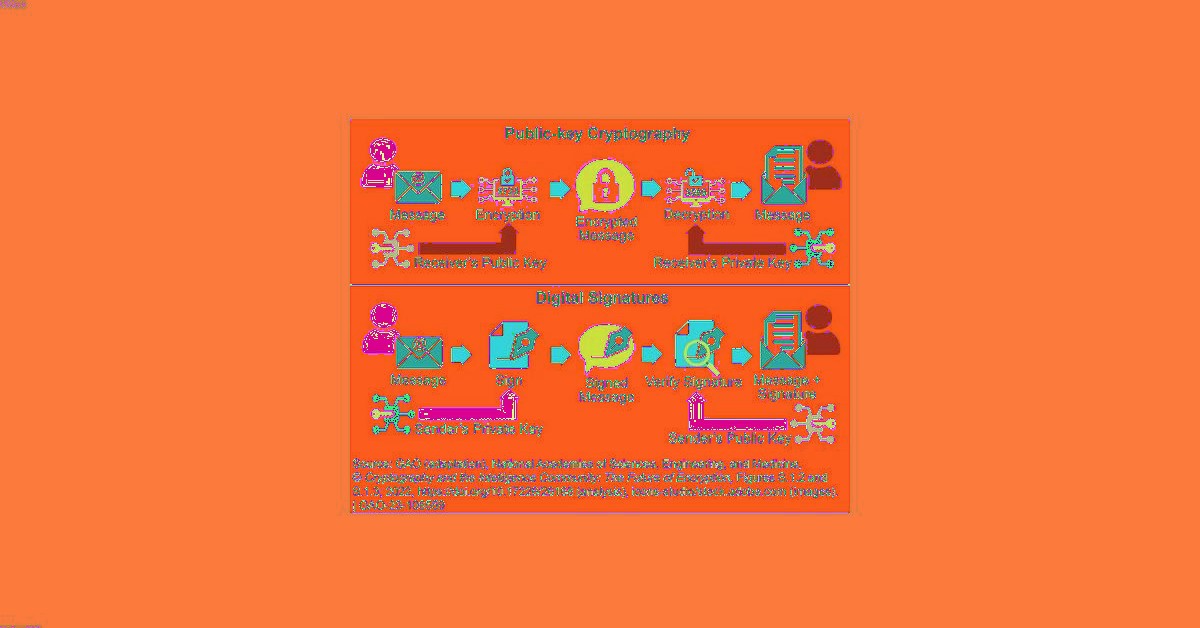
Why? Because every container is a cryptographic node. Every TLS handshake between containers uses an asymmetric key pair that will eventually be broken by Shor’s algorithm. Every JWT token signed with ECDSA will be forgeable. Every API key stored in a Kubernetes secret will be guessable by a quantum adversary.
If your PQC migration only touches network appliances, hardware security modules (HSMs), and core databases but ignores container workloads, you’ve left the front door unlocked while installing a vault on the back wall.
The Real-World Attack Path: Lateral Movement Through Containers
Let me paint you a scenario based on real incident patterns. An advanced persistent threat (APT) group—state-sponsored, well-funded—compromises a container running a third-party payment microservice. The container was built from a base image with a known vulnerability. The attacker gains initial access.
In a pre-quantum environment, that attacker could eventually pivot to other services, steal credentials, or exfiltrate data. But the bank might detect the lateral movement because encrypted traffic patterns look anomalous. Not perfect, but possible.
Now imagine a post-quantum environment where that same attacker has access to a quantum computer (or rents time from a cloud-based quantum service). They capture the encrypted traffic between the compromised container and the core banking API. In minutes, not months, they crack the public-key cryptography protecting that channel. They decrypt the entire conversation, steal session tokens, and authenticate as a legitimate microservice. Lateral movement becomes trivial.
The container—with its known vulnerabilities—becomes the quantum-enabled pivot point. That’s why post-quantum compliance for banks starts in containers: because containers are the most likely entry point for attackers, and quantum computing supercharges their ability to exploit those entry points.
What Post-Quantum Compliance Actually Means for Containerized Workloads
Let’s get tactical. Post-quantum compliance isn’t abstract—it’s a set of concrete cryptographic upgrades. Here’s what the major regulatory frameworks demand:
- Key generation must use NIST-approved PQC algorithms (CRYSTALS-Kyber for key encapsulation, CRYSTALS-Dilithium for digital signatures)
- TLS 1.3 must support hybrid key exchanges (classical + PQC)
- Digital signatures on code, images, and manifests must use Dilithium (or an approved hybrid)
- Secrets management must be quantum-resistant (no reliance on RSA or ECDH alone)
For containers, this translates into specific technical requirements:
-
Container base images must be rebuilt with PQC-compatible libraries. OpenSSL, BoringSSL, and Go’s crypto/tls need to support Kyber and Dilithium. If your containers run on older versions, they’re non-compliant.
-
Kubernetes secrets must be encrypted with PQC-enabled algorithms. The built-in etcd encryption uses AES-GCM, which is symmetric and quantum-resistant—good. But the key management for those encryption keys often uses asymmetric cryptography. That needs an upgrade.
-
Container-to-container TLS must use PQC or hybrid ciphersuites. If your service mesh (Istio, Linkerd) or cluster communication (Calico, Cilium) still relies on ECDHE key exchange, it’s vulnerable.
-
Image signing and verification must migrate to post-quantum signatures. Docker Content Trust, cosign, and Notary all need to support Dilithium for provenance verification.
-
API gateways and ingress controllers must negotiate PQC TLS. If your bank’s payment API is fronted by an ingress that only supports classical cryptography, every transaction is at risk.
The Migration Playbook: Five Steps to Quantum-Ready Containers
Here’s a practical roadmap for banks that want to start their PQC journey in the container layer—not just as a compliance checkbox, but as a genuine security upgrade.
Step 1: Audit Your Container Inventory
Start with a complete inventory of all containerized workloads. Use a tool like Trivy, Grype, or Snyk to scan for cryptographic dependencies. Identify every container that relies on:
- RSA key generation or signing
- ECDSA for TLS certificates
- X.509 certificates with classical signatures
- JWT tokens signed with RS256 or ES256
Map each container to its communication paths. Which containers talk to each other? Which talk to external APIs? Which store or process financial data?
Step 2: Upgrade Your Cryptographic Libraries
This is the heavy lifting. For each container, update the base image to a version that includes PQC-capable libraries. As of late 2025, OpenSSL 3.4, BoringSSL, and Go crypto/tls all support Kyber and Dilithium. If you’re using Python, Rust, or Java, ensure the relevant crypto libraries are up to date.
Create a central base image registry with PQC-enabled images. All development teams must pull from this registry. No exceptions. This is your single source of cryptographic trust.
Step 3: Implement Hybrid TLS in Your Service Mesh
Don’t go all-in on pure PQC yet. The algorithms are new, and there’s still debate about parameters. Instead, deploy hybrid TLS that negotiates both a classical key exchange (X25519) and a PQC key exchange (Kyber-768). This gives you backward compatibility and forward secrecy.
Configure your service mesh (Istio, Consul Connect, or Cilium) to enforce hybrid ciphersuites. Test extensively in staging. Monitor for compatibility issues with older services.
Step 4: Harden Secrets Management with PQC
Your container secrets—database passwords, API tokens, HSM keys—must be protected by PQC. If you’re using HashiCorp Vault, Kubernetes secrets, or AWS Secrets Manager, verify that the encryption layer supports Kyber or hybrid schemes.
Rotate all existing secrets. Generate new ones using PQC-capable tooling. Implement automatic secret rotation with shorter lifetimes (e.g., 24 hours for API tokens) to limit exposure.
Step 5: Validate and Certify
Compliance isn’t a one-time thing. Establish a continuous validation pipeline. Use automated scanners to check every deployed container for:
- PQC-enabled cryptographic dependencies
- No hardcoded classical keys
- Hybrid TLS on all inter-service channels
- Valid Dilithium signatures on container images
Submit your container security posture to your regulator as part of your quantum readiness report. Be prepared to produce evidence of cryptographic migration for any container that touches sensitive data.
The Cost of Inaction: More Than Just Fines
Let’s talk real numbers. A mid-size retail bank runs approximately 500 containerized microservices. Each service has an average of 4 encrypted connections. That’s 2,000 TLS channels. If only 10% remain on classical cryptography, and an attacker compromises one of those containers, the quantum-enabled lateral movement could expose customer data, transaction histories, and internal strategies.
Regulatory fines for non-compliance with PQC mandates could reach $10M+ per incident under GDPR and similar frameworks. But the reputational damage is worse. Imagine a bank announcing a quantum-related data breach in 2030. Customers will flee. Stock will drop. Regulators will scrutinize every prior compliance report.
The Bottom Line: Start in Containers, Scale from There
Containers are not just a cryptographic weak point—they are the logical starting point for post-quantum compliance. Because containers are known to contain a range of vulnerabilities, they are the most likely attack vector. Quantum computing amplifies those vulnerabilities exponentially.
Banks that begin their PQC migration in the container layer are future-proofing their most critical workloads. They’re also demonstrating to regulators that they understand the real attack surface—not just the network perimeter.
The migration won’t be easy. It requires rebuilding base images, updating service meshes, and retraining teams. But it’s the only way to ensure that when quantum computing arrives, your containers remain trust boundaries, not entry points.
Start today. Audit your containers. Upgrade your libraries. Deploy hybrid TLS. The quantum clock is ticking—and your containers are counting the seconds.
For more on post-quantum cryptography compliance for financial services, subscribe to B2B Pulse. We deliver actionable GTM and security strategies to growth-focused SaaS and tech teams.